
Organic Agriculture
What is organic farming?
Delicious grapes with Flusilazol
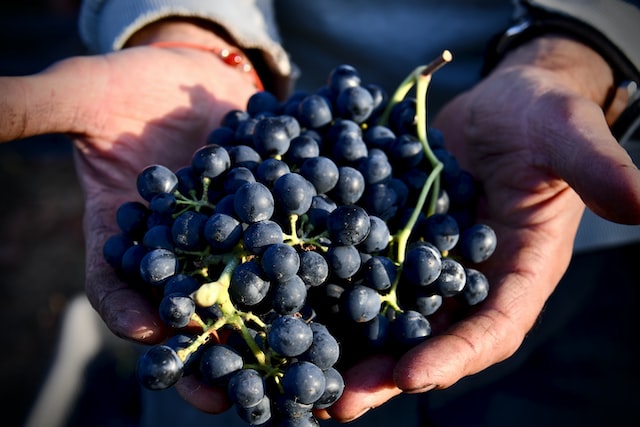
Once again, Greek fruits exported to Europe were “caught” sprinkled with poisonous pesticide residues higher than the “permissible limits.” The latest incident, according to the newspaper “Ta Nea,” occurred in Germany, and the humiliating and damaging announcement for Greece was issued by the Ministry for Consumer Protection of the state of North Rhine-Westphalia.
According to German inspections, Greek grapes were found to exceed the limits by 27% with residues of the pesticides Flusilazole and Cypermethrin, which are likely to cause various liver damages, fetal harm, cancers, etc. The champions of poisonous performances after this inspection were Turkish grape producers with excesses reaching 42%, followed by the Spaniards in second place with 33%.
It’s not worth focusing on this particular inspection; it’s just another one that reminds us from time to time how often intensive farming becomes reckless when, in the name of securing incomes and profits, methods of crop protection that are already dangerous to human health are applied abusively and in violation of all guidelines.
It’s chilling to even think that if poisonous residues are detected in export batches, which are certain to be inspected under the microscopes and reagents of European laboratories, what must be happening with the other fruits and vegetables that we, the Greek natives, consume. Agricultural crops in Greece in the 21st century are carried out under a regime of complete lawlessness. A very inadequate system of bureaucratic inspections, which are never conducted in the fields but only in retail, with an essentially non-existent mechanism, ultimately places the observance of basic rules on the conscience of the farmers. Completely illiterate Pakistanis, Indians, and self-taught Albanians are spraying and fertilizing the Greek crops. In what language do they read instructions? In what language do they communicate with agronomists? Why doesn’t the Ministry of Agricultural Development and Food establish prescription regulations for pesticides and the responsibility for signing and executing these prescriptions? When did a ministry team ever conduct a surprise inspection in the field? Never! This particular ministry, under all governments, does not function as an institution that regularly and strategically oversees, with the help of science, the production of quality food. It operates like a small to medium-sized manager distributing subsidies and tolerance to the shrinking agricultural population, hoping for green or blue votes.
Yet there is another way. Pioneering Greeks and Greeks terrified by the cancers that are reaping them, even before the farmers themselves, are undertaking organic and non-intensive farming throughout Greece. This would be the future, for a land that generously offers us excellent products. The only ones who would be harmed by a change in direction would be those who manufacture poisons and those who sell them uncontrollably. Do we have any common interest with them?
Identification Information
Organic products not only need to be organic, but they also need to appear as such. The correct labeling of organic products is as follows:

Label
The product must bear the recognition mark of certified Greek organic agricultural (or livestock) products. Currently, each control organization (Bio-Hellas, DIO, Physiology Ltd.) has its own mark, but from early 2006, a unified recognition mark will be in effect.
Indication
The product must bear the label “organic farming product.”
Details
The product must display the name of the certification organization that inspects it, as well as its approval code number.
Origin
The product must state the name of the producer, the processor (if different), the place of production, and any other information related to the identity of the product.
Packaging
Τhe product must be in closed consumer packaging (pre-packaged) unless it is sold at the production site. In this case, consumers are advised to ask for the relevant certificate.
A way of life …
Organic products are not just another category of consumer goods. For us farmers, they are a way (perhaps the only way) to protect our health while simultaneously safeguarding the environment and consumers themselves. Although today organic products are still the exception – and for some, they may be synonymous with traditional products – the wish of all of us involved in agriculture and animal husbandry is that one day all agricultural products will be organic.
For now, you can find organic products in one of the many specialized stores operating throughout Greece, as well as at the following organic farmers’ markets (the list is from ‘ΟΙΚΟ’ of Kathimerini):
Monday
- Περιστέρι (Aγ. Aντώνιος) Πάρου και Δημοσθένους, 14:000 -18:000.
-
Kηφισιά, οδός Κ. Καραμανλή και Κοκκιναρά, 14:00 – 18:00.
- Χαϊδάρι, Φιλοπάππου, όπισθεν νέου Δημαρχείου, 14:00 – 18:00
- Νέα Σμύρνη, Λ. Συγγρού 221, 14:00 – 18:00
Tuesday
- Nέο Hράκλειο: Πλ. Καραϊσκάκη, 14:00 – 18:00.
- Kορυδαλλός: Πλ. Eλ. Βενιζέλου, 14:00 – 18:00.
- Παλαιό Ψυχικό: Άλσος, 14:00 – 18:00
- Νίκαια: Θηβών 243, πολιτιστικό κέντρο “Μάνος Λοΐζος”, 14:00 – 18:00
- Θεσσαλονίκη: Περαία, Ανθέων και Μήδειας, 14:30 – 17:30 (χειμώνας), 17:00 – 20:30 (καλοκαίρι)
Wednesday
- Hλιούπολη: πλατεία ΙΚΑ, 14:00 – 18:00.
- Πειραιάς: Κλεισόβης και Χατζηκυριακού, δίπλα στο Χατζηκυριάκειο Ίδρυμα, 14:00 – 18:00
- Χαλάνδρι, Τυμφρηστού και Ιωαννίνων, 13:00 – 17.30.
- Φιλοθέη: Στρατηγού Βεντήρη και Αγίας Φιλοθέης, 13:00 – 17:30
- Θεσσαλονίκη, Βότση (Ι.Ν. Αγ. Παντελεήμωνα), 08.00 – 13.00.
Thursday
Gerakas, in the middle of Ethnikis Antistaseos Street, 14:30 – 17:30.
Palaio Faliro, at the intersection of Naiadon and Zaimi Streets, 14:30 – 17:30.
Thrakomakedones, Albanella Square, 14:30 – 17:30.
Thessaloniki, Neapoli, at the Town Hall, 08:00 – 14:00.
Friday
Kolonaki, Dexameni Square, 14:30 – 17:30.
Cholargos, across from the Town Hall, 14:30 – 17:30.
Kaisariani, behind the Niar East stadium, 14:30 – 17:30.
Larissa, Neapoli, Covered Market, 11:00 – 14:30.
Saturday
- Bούλα, οδός Νηρέως, 08:30 – 14:00.
- Ελευσίνα: όπισθεν του Δημαρχείου Ελευσίνας, 08:30 – 14:00
- Ίλιον: Escape Center στο Πάρκου «Α. Τρίτση», 08:30 – 14:00.
- Θεσσαλονίκη Kαλαμαριά, στο πρώην στρατόπεδο Κόδρα., 08:00 – 13:00.